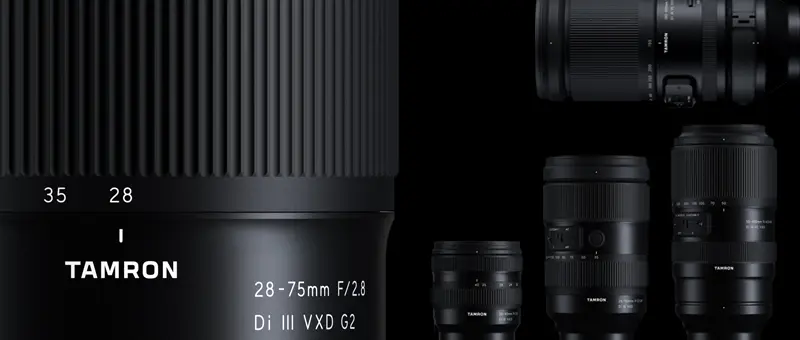
Optical Technologies
-
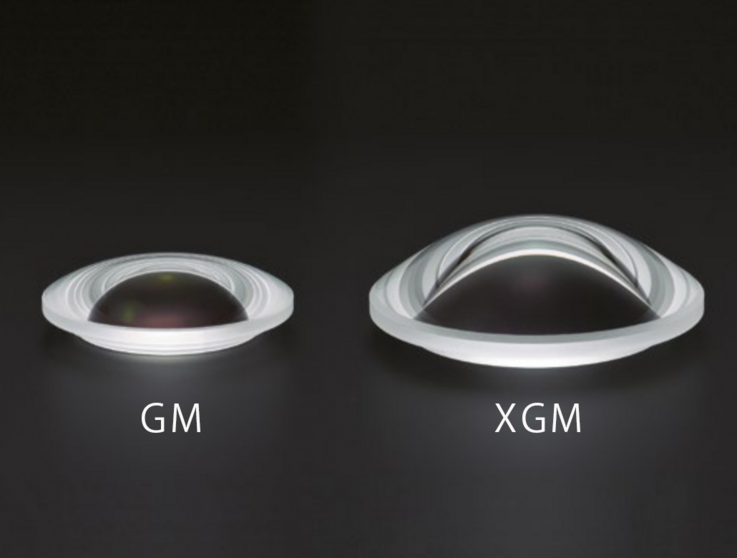
XGM lens elements allow to harmonize both fast-aperture and distinguishably high resolution by minimizing distortion and enhancing the sharpness of the image at its periphery
Not only minimizing geometric distortion and/or spherical aberration, it also enables the ability to attain higher resolution while making the overall mechanical dimensions smaller. TAMRON’s XGM is a nomenclature of the breakthrough technology which yields aspheres of larger apertures exceeding 55mm in diameter. Fast-aperture and distinguishably high resolution across the field are harmonized by virtue of deploying the XGM element while keeping the overall form factor to the smallest possible without compromising any performance criteria.
-
-
GM lens elements have a significant impact on minimizing distortion and enhancing the sharpness of the image at its periphery
GM lens elements are capable of efficiently correcting aberrations in the angle of view that changes significantly with an ultra wide-angle zoom lens. It has an especially significant impact on minimizing distortion and enhancing the sharpness of the image at its periphery. Furthermore, the molded-glass manufacturing method allows the fabrication of a wider range of lens shapes than the composite aspherical lens method.
-
-
XLD lens elements made from specialized ultra-high-grade glass allow much greater control over chromatic aberration and magnification aberrations
XLD lens elements made from specialized ultra-high-grade glass allow much greater control over chromatic aberration and magnification aberrations than LD lens elements. XLD lens elements deliver the highest possible contrast, the finest detail, and superior imaging performance throughout the entire zoom range.
-
-
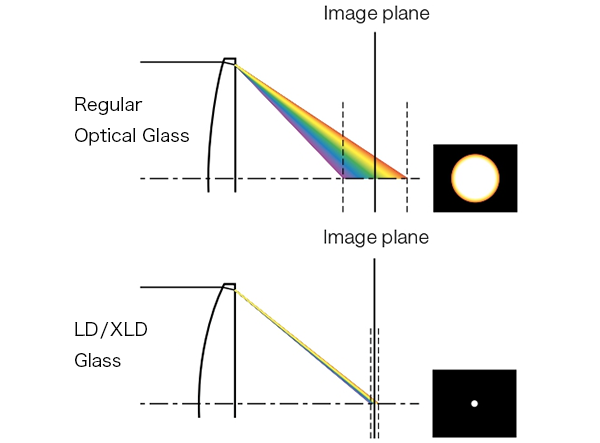
A specialized glass material that effectively eliminates and compensates for chromatic aberration by utilizing its extremely low light dispersion properties
LD lens elements are crafted from low-refractive glass featuring extremely low dispersion — the characteristic where white light splits into a rainbow of colors as it refracts — a primary cause of chromatic aberration that degrades image sharpness. These elements reduce both axial chromatic aberration, which is most commonly seen at telephoto focal lengths, and lateral chromatic aberration, which frequently occurs at wide-angle focal lengths.
-